
e-Invoicing Extended to RCM Self-Invoices (RCMDOM & RCMIMP)
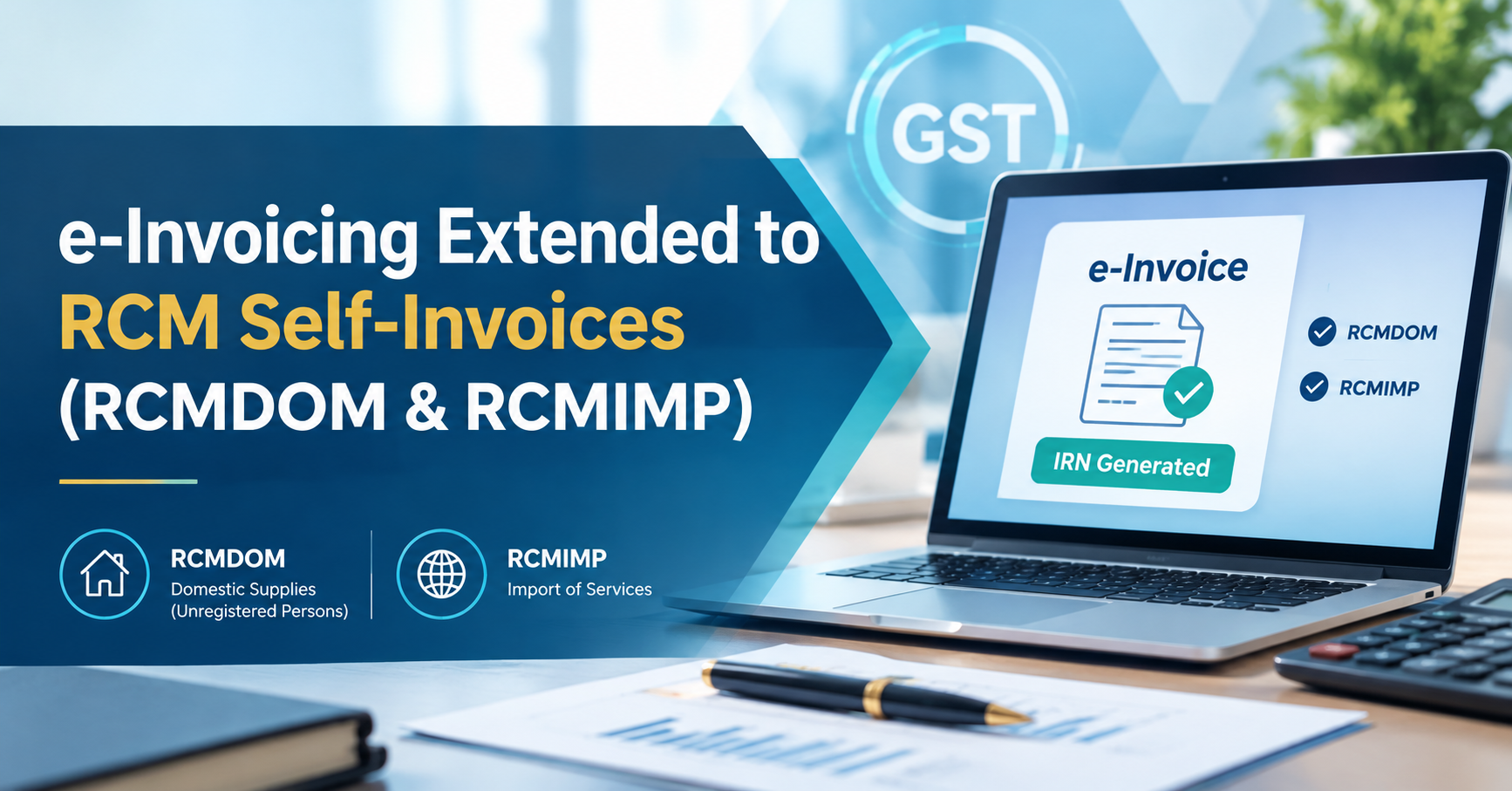
GST e-Invoicing Extended to RCM Self-Invoices: New Supply Types RCMDOM and RCMIMP
The Goods and Services Tax Network (GSTN) has announced a new e-invoicing facility for recipient-generated self-invoices under the Reverse Charge Mechanism (RCM). As per the GSTN Advisory dated 16 October 2026, the facility introduces two new supply types, RCMDOM and RCMIMP, following recommendations made at the 57th GST Council meeting.
1. What Is the New GSTN Update?
Under the Reverse Charge Mechanism, the recipient is responsible for paying GST on specified supplies instead of the supplier. GST law also requires registered recipients to issue self-invoices in applicable cases, including specified purchases from unregistered suppliers.
GSTN is enhancing the e-invoicing system to allow eligible registered recipients to report these self-invoices through authorised Invoice Registration Portals (IRPs) and obtain an Invoice Reference Number (IRN).
The proposed facility is intended for taxpayers with Aggregate Annual Turnover (AATO) of Rs. 5 crore or more, subject to applicable GST provisions and government notifications.
2. Understanding the Two New Supply Types
GSTN has introduced the following supply-type codes for reporting recipient-generated self-invoices.
-
RCMDOM – Reverse Charge Mechanism on Domestic Supplies: For specified domestic supplies received from unregistered persons where the registered recipient is liable to pay GST under RCM.
-
RCMIMP – Reverse Charge Mechanism on Import of Services: For imports of services from suppliers located outside India where the recipient is liable to pay GST under RCM.
These codes will help distinguish the two categories when reporting self-invoices through the e-invoicing system.
3. How Will the New E-Invoicing Process Work?
Under the announced facility, eligible and active GST-registered recipients will be able to report their self-invoices through an authorised IRP.
The process will broadly involve:
-
Identifying the relevant reverse-charge transaction.
-
Preparing the self-invoice with the prescribed invoice particulars.
-
Selecting the appropriate supply type: RCMDOM or RCMIMP.
-
Submitting the invoice details through an authorised IRP.
-
Obtaining an Invoice Reference Number (IRN) after successful validation.
The new facility is intended to extend the existing e-invoicing framework to these recipient-generated documents. It does not remove the need to comply with the applicable GST provisions governing self-invoicing and reverse-charge liability.
4. Current Status: Sandbox Testing Only
As stated in the GSTN Advisory dated 16 October 2026, the new functionality is available in the sandbox environments of all six IRPs for testing and system integration. The production rollout date and commencement of reporting requirements have not yet been announced.
Businesses, accounting professionals and software providers can prepare by:
-
Reviewing reverse-charge transactions involving unregistered domestic suppliers and overseas service providers.
-
Checking whether their accounting or ERP software can support the new supply types.
-
Testing invoice data and validation requirements in the sandbox, where applicable.
-
Monitoring official GSTN announcements for the detailed technical specifications and rollout instructions.
Important: The GST Council's recommendation and the availability of a sandbox facility do not, by themselves, make the new reporting requirement mandatory. Its scope, applicability and effective date remain subject to the relevant government notifications.
5. What Should Businesses Do Now?
Businesses with aggregate annual turnover of Rs. 5 crore or above should review their existing reverse-charge accounting processes and prepare for the proposed change. However, they should not treat sandbox availability as a direction to begin mandatory production reporting.
For the legal and operational position, refer to the GSTN Advisory dated 16 October 2026 and monitor the official GST e-Invoice portal and GST Council website for further announcements.
Conclusion
The introduction of RCMDOM and RCMIMP marks a planned expansion of the e-invoicing framework to recipient-generated self-invoices under the Reverse Charge Mechanism. Businesses should prepare their accounting systems and monitor official notifications before implementing any mandatory changes.
For expert guidance on this topic, contact your tax professional today.
EXCERPT: GSTN has introduced RCMDOM and RCMIMP for RCM self-invoices, with sandbox testing underway and the production rollout date still awaited.
SEO_TITLE: GST E-Invoicing for RCM Self-Invoices: RCMDOM & RCMIMP
SEO_DESCRIPTION: Understand GSTN's new RCMDOM and RCMIMP e-invoicing facility, turnover threshold and rollout status. Contact your tax professional today.
Have Questions? We're Here to Help
Get expert advice from Abhishek Raj & Associates. Reach out to discuss your requirements.